
Description
1. Basic identity & context
-
The DF2211UFP24V is manufactured by Renesas Electronics. Mouser Electronics+1
-
It is categorized as a 16-bit microcontroller (MCU) in the H8S/2200 series. Angel Technology Electronics Co+1
-
Specifically, its descriptor in one listing: “16-bit Microcontrollers – MCU 3 V 64K Pb-free 64-LQFP”. Mouser Electronics
-
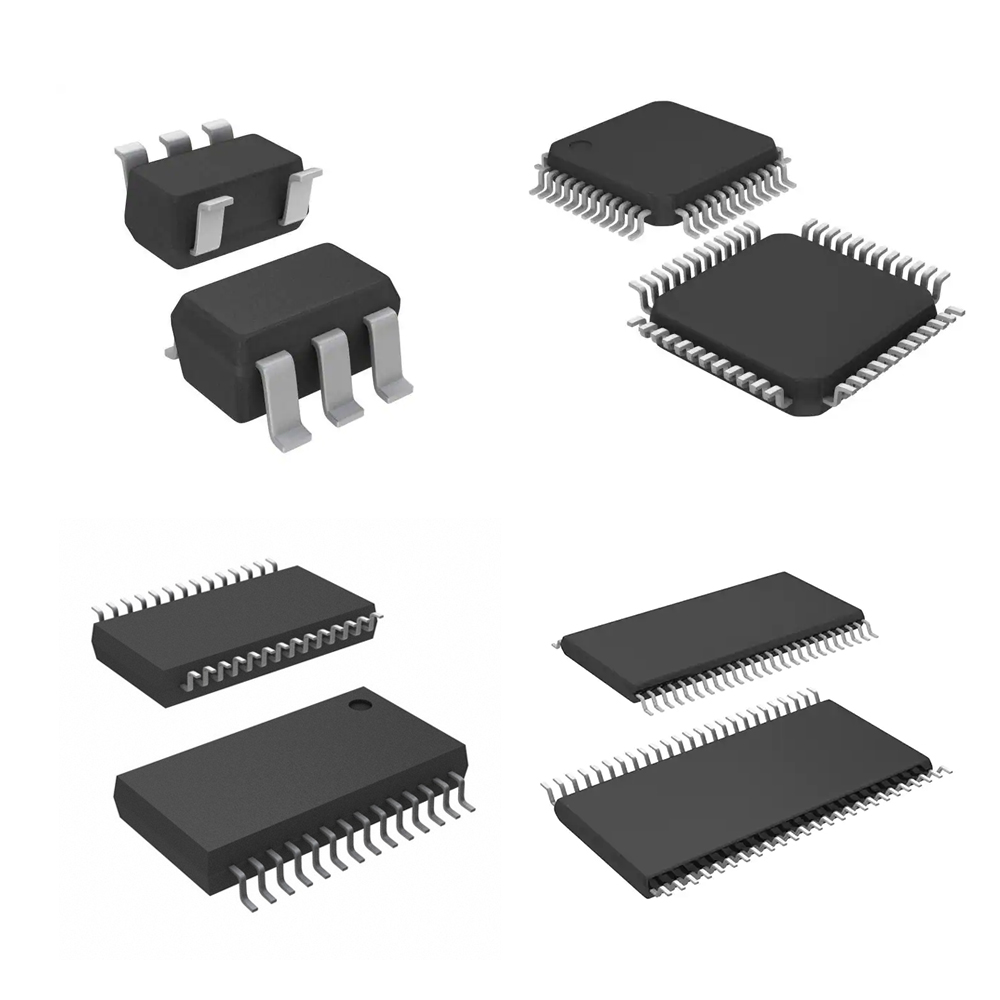
Package: 64-lead LQFP (Low-profile Quad Flat Package) – 64 pins, surface mount. Angel Technology Electronics Co+1
-
Program memory: 64 kB (64 K × 8) Flash. Angel Technology Electronics Co+1
-
Data RAM: 8 kB (as given in some specs) Angel Technology Electronics Co
-
Core: H8S/2000 family, 16-bit architecture. Angel Technology Electronics Co+1
-
Maximum clock speed: 24 MHz. Angel Technology Electronics Co+1
-
Supply voltage: around 2.7 V to 3.6 V typical. Angel Technology Electronics Co+1
-
Operational temperature: from –20 °C to +75 °C (some listings) Mouser Electronics+1
-
The part appears to be flagged “Obsolete” / “Not for new designs” in one listing. Mouser Electronics+1
2. Key features & functional blocks
Given the information available and the H8S/2200 series context, here are likely features:
-
16-bit data bus / architecture: The “16-bit microcontroller” listing.
-
Flash program memory: 64 kB, giving space for firmware code.
-
RAM: ~8 kB for runtime data.
-
Package: 64-LQFP – implies a moderately sized package for surface mount, good pin-count for multiple I/O.
-
Operating voltage ~3.0 V nominal (3V series) — suitable for moderately low-power designs but not ultra-low power.
-
On-chip peripherals: In listings we see reference to ADC (10-bit, 6 channels) and various interfaces: SCI (Serial Communication Interface), SmartCard interface, USB mention (though this may be generic listing). Angel Technology Electronics Co
-
Watchdog Timer, Pulse Width Modulation (PWM) functionality, POR (Power-On Reset) — typical for microcontrollers in this class. Angel Technology Electronics Co
-
The series name “H8S/2200” indicates a fairly generic microcontroller family by Renesas aimed at embedded control tasks. (The H8/H8S families were quite popular in industrial and automotive embedded applications)
3. Typical applications
Given its specification, the DF2211UFP24V would be suited for:
-
Embedded control systems where moderate compute is required (16-bit MCU, 24 MHz)
-
Industrial instrumentation or control modules
-
Appliance or automotive sub-systems (if allowed by temperature and qualification)
-
Systems requiring moderate flash/RAM capacity and multiple I/O lines (given the 64-pin package)
-
Legacy equipment where a 16-bit MCU is acceptable and cost is more important than ultra-performance
However, one must note the “Not for new designs” / “Obsolete” status — meaning using it for new designs may risk support or future sourcing.
4. Benefits & limitations
Benefits:
-
The 64-LQFP package gives a reasonable number of pins, allowing flexible I/O and peripheral usage.
-
Flash memory of 64 kB is adequate for moderate firmware complexity without being expensive.
-
16-bit architecture offers a step up from 8-bit, giving more performance and addressability while still lower cost than a 32-bit MCU.
-
The supply voltage around 3 V means it can fit within many embedded systems easily (not requiring 5 V necessarily).
-
From a supply/distributor listing, the part is still found (though with caveats) which means aftermarket or repair use is feasible.
Limitations / Considerations:
-
16-bit architecture: While suitable for many tasks, if you need high-performance signal processing, 32-bit MCUs would be better.
-
Speed: 24 MHz is modest in today’s terms. For tasks requiring high throughput or complex algorithms (e.g., heavy DSP, machine learning), this may be insufficient.
-
Memory: 64 kB flash and ~8 kB RAM may be limiting if firmware size grows (for example graphical interfaces, large data handling).
-
Obsolescence: The listing indicates that the part is obsolete or “not for new designs”, meaning design risk (future supply, support, etc.).
-
Temperature range: –20 °C to +75 °C is fine for many consumer/industrial uses, but not for harsh environments (automotive under-hood, extreme conditions) unless qualified.
-
Peripherals: We must check specifics of which interfaces it supports — e.g., USB mention may be variant or generic listing; actual product might not support all modern interfaces.
5. Design/implementation considerations
If you plan to use (or have a design with) DF2211UFP24V, keep these in mind:
-
Footprint/Package: The 64-LQFP (10 mm × 10 mm typical) SMD package means you need suitable footprint, soldering, thermal considerations for surface-mount.
-
Power supply: Provide a stable 3.0 V (or 3.3 V) supply within the specified 2.7-3.6 V range. Decoupling capacitors close to MCU Vdd/Vss are important.
-
Clock: Ensure external or internal oscillator selection is compatible; the 24 MHz max clock suggests external crystal or oscillator may be used.
-
Reset / POR / WDT: Use proper circuit for power-on reset to manage MCU startup. Watchdog timer should be configured for system reliability.
-
I/O mapping: With 64 pins, you’ll likely have many I/O lines. Consider I/O voltage levels, pin multiplexing, and peripheral assignment.
-
Firmware size: With 64 kB flash, code size must be constrained; careful use of libraries, optimize code for size if needed.
-
Supply chain risk: Given obsolescence status, check remaining life, alternate sourcing, and possibly plan for future migration to a newer MCU family.
-
Thermal/EMI: Surface mount package and multiple I/Os may mean PCB layout matters — keep analog/power lines away from noisy digital lines, provide ground plane, etc.
-
Availability of development tools: Ensure you have appropriate tool-chain (compiler, debugger) for the H8S/2200 series; future support may be limited if the product is obsolete.
6. Summary
In summary: the DF2211UFP24V is a 16-bit microcontroller from Renesas (H8S/2200 series) in a 64-LQFP package, with 64 kB flash, ~8 kB RAM, ~24 MHz clock, supply ~3 V, and a moderate number of I/Os/peripherals. It is well-suited for embedded control applications of moderate complexity but is somewhat dated and flagged as “not for new designs”. If you are maintaining legacy equipment or doing repair/maintenance, it may still be valid. But for new designs you might consider a more modern MCU with richer peripherals, higher performance, better future support.




Reviews
There are no reviews yet.