
Description
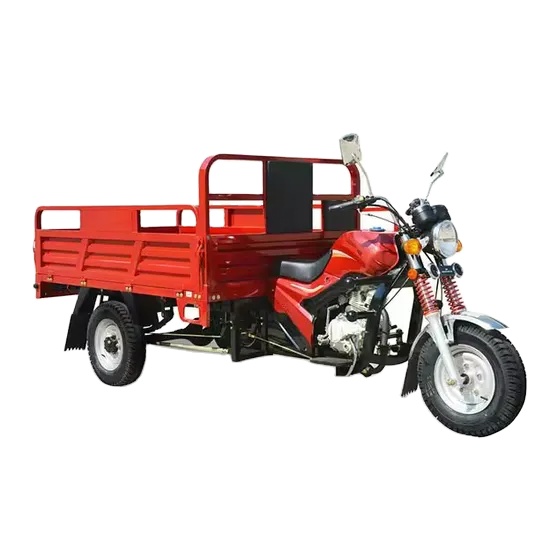
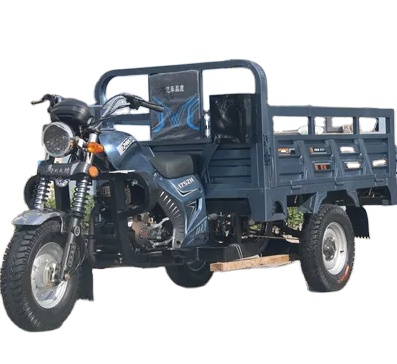
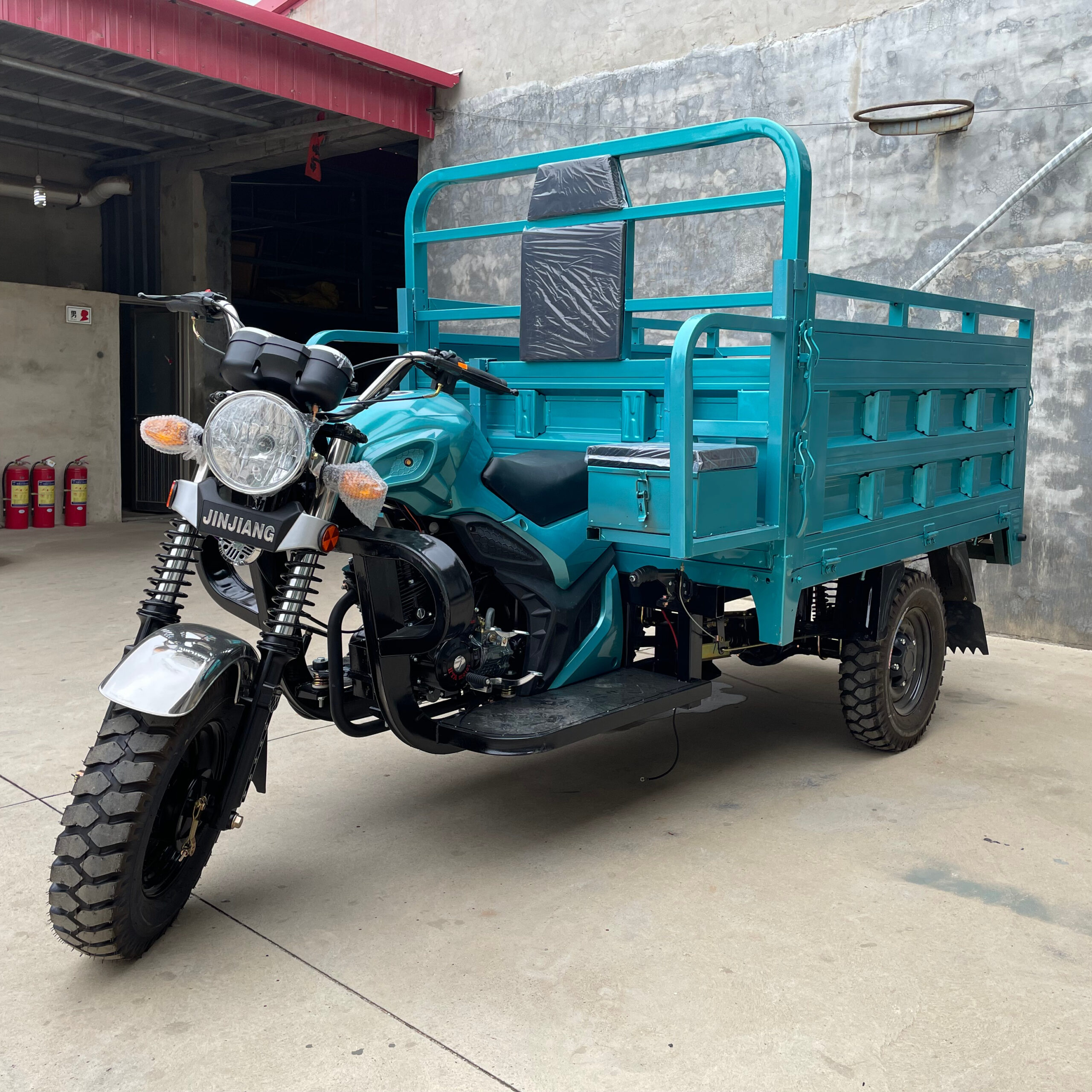
Here’s a detailed description of a three-wheeled gasoline motor/motorcycle tricycle with cargo box, as used in markets such as Ghana — what it is, how it works, its typical specifications, uses, advantages and things to watch out for.


What is it?
This vehicle is essentially a motorised tricycle (three wheels) powered by a gasoline (petrol) engine, designed primarily for cargo transport rather than passengers. It combines aspects of a motorcycle (engine size, wheels) with a small cargo box/tray mounted on a robust frame and a three-wheel configuration for stability and load capacity. For example, manufacturers reporting units for the Ghana market describe models such as: “Three Wheel Gasoline Motor/Motorcycle Tricycle with Cargo Box – 150 cc/200 cc/250 cc”. dayangmoto.com+2dayangnaki.com+2
In many markets (including Ghana), these vehicles are used by small-business owners, traders, transporters of goods within cities, peri-urban and rural areas, where heavier trucks may not be economical or manoeuvrable.
Typical design & specifications
Here are the kinds of features you’ll typically see, with examples drawn from available models:
-
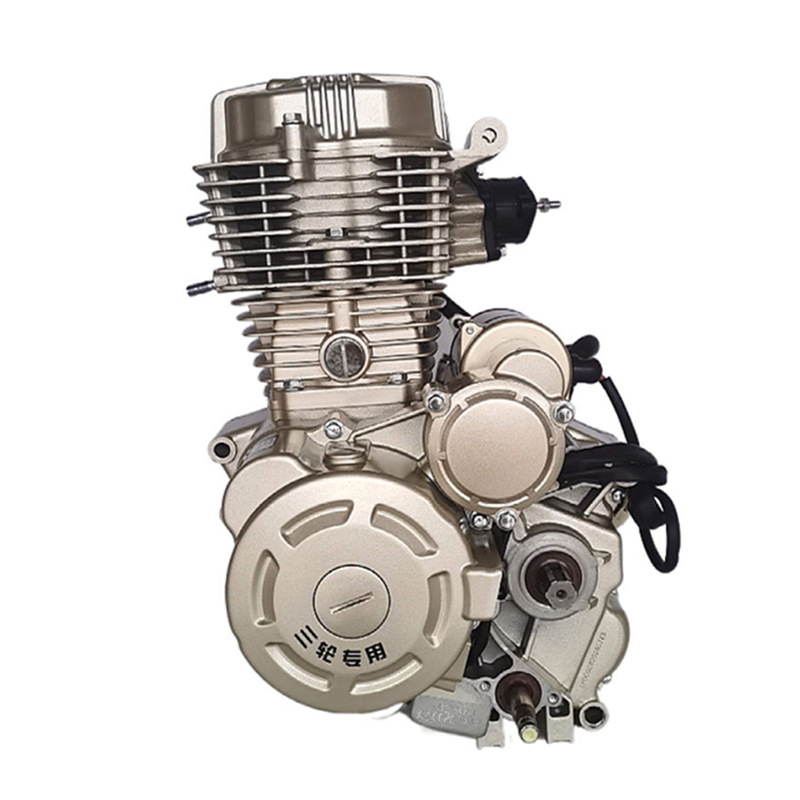
Engine / Displacement: Gasoline engine; common sizes for the cargo tricycle are 150 cc, 200 cc, 250 cc, even up to 300 cc. dayangmoto.com+2mototricycle.sell.everychina.com+2
-
Cooling / Engine type: Some are air-cooled (especially lower cc), others water-cooled in larger models. For example a 250cc water-cooled engine in one model. dayangmoto.com+1
-
Frame & Chassis: Reinforced steel frame (examples: 40×80 mm or 50×100 mm rectangular section steel) for load bearing. dayangnaki.com+1
-
Wheels / Tyres: Three wheels (one front, two rear). Typical tyre size: for example 5.0-12 or 4.5-12. dayangmoto.com+1
-
Cargo Box / Tray: The box mounted at the rear (over the two wheels) sized for local goods transport. Example: cargo box 2.4 m × 1.35 m in one model. dayangnaki.com
-
Suspension / Rear axle: Heavier duty rear axle and suspension leaf springs (e.g., 5+2 leaf springs) to handle load. mototricycle.sell.everychina.com
-
Brakes: Drum brakes front and rear in many models. Some heavier duty may add hydraulic or disc options. huaihaiglobal.com
-
Top Speed / Performance: Given the engine sizes and load, speeds might be in range of 50–70 km/h in some models. huaihaiglobal.com
-
Use case: Designed for cargo transport—to move goods, perhaps small freight, in contexts where full-size trucks are impractical.
-
Payload capacity: Varies with model, but many specify several hundred kg (e.g., ≥400 kg or more) in heavier duty versions. mototricycle.sell.everychina.com
Why these vehicles are popular in places like Ghana
-
Affordability: Compared to full trucks, these are less costly to purchase, operate and maintain.
-
Flexibility & manoeuvrability: Their smaller size allows navigation of narrower streets, more localized transport, intra-city or peri-urban roads.
-
Cargo capacity suited to local trade: They hit a sweet spot in load (heavier than a motorcycle with side-cart, but lighter and cheaper than a small truck).
-
Fuel type & infrastructure compatibility: The gasoline engine makes them viable where petrol is available and simpler maintenance is preferred.
-
Adaptability: They can be used for many types of goods-movements: market goods, small deliveries, farm produce, construction materials, etc.
What to look out for / Challenges
If you’re considering such a vehicle (either purchasing or operating), here are some things to keep in mind:
-
Build quality & durability: Given rough roads, heavy loads and maintenance conditions, a strong frame, good engine cooling/quality, robust tyres & suspension are important.
-
Spare parts & servicing: Especially in Ghana, you’ll want a model with available parts locally, and mechanics who can service them. Imported models may have parts delays.
-
Payload vs. stability: Overloading or poor weight distribution on a three-wheeled vehicle can compromise stability (especially when turning or on uneven ground).
-
Legal & registration: Ensure the vehicle aligns with local transport regulations (licensing, registration, local roadworthiness) in Ghana.
-
Fuel consumption & economy: A larger cc engine will carry more load but also use more fuel. For business use you’ll want to balance acquisition cost, fuel cost, maintenance cost and revenue.
-
Road conditions: Many roads in Ghana (especially outside major cities) may be rough, uneven or unpaved — so tyres, suspension, ground clearance matter.
-
Resale value & brand support: Choosing a brand/model that has some local reputation may help in resale or obtaining support.
-
Safety considerations: With three wheels and cargo, braking distance increases, turning dynamics differ from two-wheel bikes or cars — training drivers is important.
Example specification snapshot (typical)
Here’s an illustrative specification combining multiple sources:
-
Engine: 250 cc, water-cooled gasoline four-stroke engine. dayangnaki.com+1
-
Cargo box size: approx. 2.5 m (length) × 1.4 m (width) in some high-capacity models. dayangnaki.com+1
-
Tyre size: 5.0-12 front and rear (in heavier models). huaihaiglobal.com+1
-
Frame: 50×100 mm steel chassis (in some models). dayangnaki.com
-
Rear suspension: 6+3 leaf springs in some heavy models. dayangnaki.com
-
Max speed: ~60 km/h (depending on load) in some models. huaihaiglobal.com
-
Payload: Several hundred kg (400 kg+ in some models) depending on design. mototricycle.sell.everychina.com
Use-cases in Ghana
In the Ghanaian context, such a vehicle might be used for:
-
Delivering goods from wholesalers to retailers in towns.
-
Transporting produce from farms to markets or collection points.
-
Building / construction material transport (sand, blocks, small equipment) in areas where larger trucks cannot reach.
-
Small-scale distribution in urban neighbourhoods: beverages, bottled water, crates, etc.
-
Waste or recycling collection in smaller localities.
-
Possibly as a rental vehicle for informal transport businesses.
Why I described it in detail
Because when evaluating such a vehicle you’ll want to understand not just “what it is” but how well it will perform in your environment (Ghana) — the engine size, load capacity, serviceability, and operational economics matter. If you’re thinking of buying one, or using one for business, this level of detail helps you compare models, ask the right supplier questions, and plan for maintenance and operation.




Reviews
There are no reviews yet.